
Cancer is fundamentally a disease of the genome. Mutations, copy-number alterations, structural rearrangements, epigenetic dysregulation, and transcriptional reprogramming all converge to drive tumour initiation, progression, and treatment resistance. At BioinformaticsNext, we provide end-to-end computational bioinformatics support for oncology researchers — from raw sequencing reads to publication-ready biomarker discovery and precision medicine insights.
Bioinformatics for Cancer & Oncogenomics
Translating massive molecular datasets into meaningful clinical insights.
Modern oncology generates staggering volumes of molecular data. A single whole-genome sequencing run produces gigabytes of raw reads; a single-cell RNA-seq experiment may profile tens of thousands of individual tumour cells. Without robust computational pipelines, this data cannot be translated into meaningful biology or clinical insight.
Our Cancer & Oncogenomics service integrates cutting-edge sequencing technologies with expert bioinformatics to give oncology researchers, pharmaceutical teams, and clinical scientists a complete molecular portrait of the tumour — its genome, transcriptome, and epigenome.
What We Analyse
Comprehensive molecular profiling across all major cancer data types.
- Somatic mutations, copy-number variants (CNVs), and structural rearrangements
- Tumour mutational burden (TMB) and microsatellite instability (MSI) status
- Clonal architecture, tumour heterogeneity, and evolutionary dynamics
- Fusion transcripts, aberrant splicing events, and non-coding RNA dysregulation
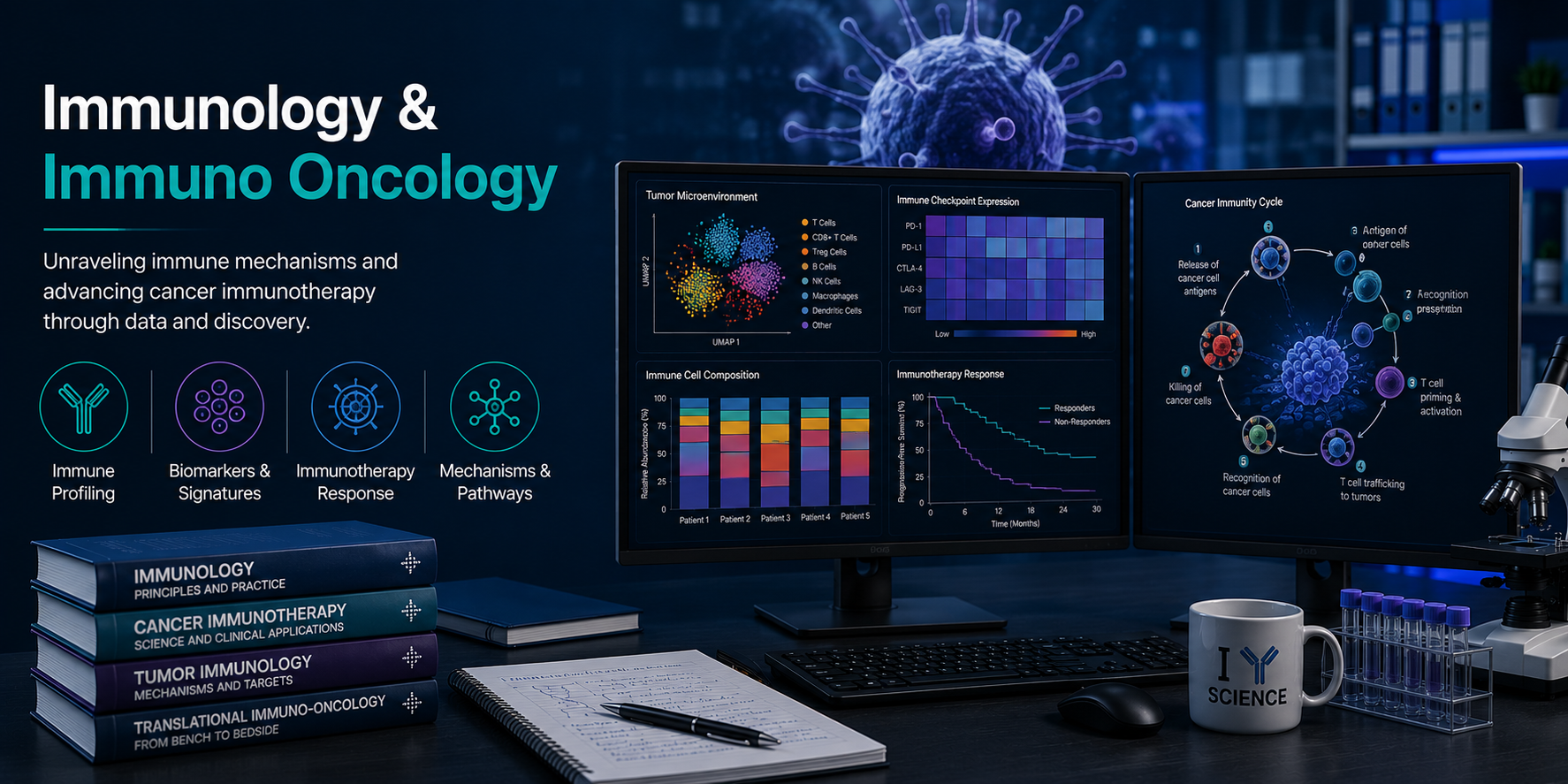
- Immune cell infiltration and tumour microenvironment (TME) composition
- Epigenetic reprogramming, chromatin accessibility, and DNA methylation changes
- Multi-omics integration across genome, transcriptome, proteome, and metabolome
Our Oncogenomics Services
End-to-end support across the full spectrum of cancer genomics data types.
Each service is built on validated, peer-reviewed pipelines and tailored to your specific research question, sample type, and downstream application.
1. DNA Sequencing & Variant Analysis WGS · WES · Panel
Whole-genome sequencing (WGS), whole-exome sequencing (WES), and targeted panel sequencing are the cornerstones of cancer genomics. Our DNA analysis service delivers a complete somatic mutation landscape from raw reads to clinically annotated variants.
- Raw read QC & preprocessing — FastQC, Trimmomatic, fastp; adapter removal and quality trimming across all sample types
- Reference alignment — BWA-MEM2 / STAR with GATK best-practice post-processing, including base quality score recalibration and duplicate marking
- Somatic variant calling — SNVs, indels, and MNVs using ensemble callers: Mutect2, Strelka2, VarScan2, and SomaticSniper with intersection filtering
- Copy-number variation (CNV) — Allele-specific copy-number profiling with ASCAT, CNVkit, and PURPLE; segmentation and visualisation
- Structural variants (SVs) — Inversions, translocations, and gene fusions detected via GRIDSS, LUMPY, and Manta
- Clonal deconvolution — Tumour purity and ploidy estimation; clonal evolution reconstruction with PyClone-VI and CLONET
- Variant annotation — Against COSMIC, ClinVar, OncoKB, CIViC, dbSNP, and gnomAD for biological and clinical interpretation
- Biomarker scoring — Tumour mutational burden (TMB) calculation and microsatellite instability (MSI) status for immunotherapy guidance
2. RNA Sequencing & Transcriptomic Profiling RNA-seq
The cancer transcriptome reveals how genomic alterations are functionally expressed. Our RNA-seq services span differential expression, fusion detection, splicing analysis, and non-coding RNA profiling.
- Differential gene expression — DESeq2, edgeR, and limma-voom; pathway enrichment via GSEA, fGSEA, and clusterProfiler with MSigDB and KEGG gene sets
- Fusion transcript detection — STAR-Fusion, Arriba, and FusionCatcher with evidence-based validation filtering and breakpoint annotation
- Alternative splicing — Exon skipping, intron retention, and novel isoform discovery with rMATS, SUPPA2, and Whippet
- Long-read transcriptomics — PacBio and Oxford Nanopore full-length isoform characterisation for complex loci
- Non-coding RNA profiling — lncRNA, miRNA, and circRNA quantification, differential expression, and interaction network analysis
- Co-expression network analysis — WGCNA; hub gene identification and module-trait correlation for functional interpretation
3. Single-Cell RNA Sequencing (scRNA-seq) 10x · Smart-seq2 · Parse
Bulk RNA-seq masks the cellular heterogeneity that is central to cancer biology. Single-cell approaches resolve tumour cell states, cancer stem cell populations, and immune infiltrates at single-cell resolution — revealing biology invisible in bulk data.
- Platform support — 10x Genomics Chromium, Smart-seq2, and Parse Biosciences; flexible to your experimental design
- Alignment & QC — Cell Ranger / STARsolo; ambient RNA removal (SoupX, DecontX); doublet detection (Scrublet, DoubletFinder)
- Clustering & cell-type annotation — UMAP / t-SNE dimensionality reduction; Louvain / Leiden clustering; SingleR and manual curation with canonical marker genes
- Differential abundance — Compositional testing with Milo and scCODA to identify shifts in cell-type proportions across conditions
- Trajectory & pseudotime inference — Monocle3, scVelo, and Palantir for mapping tumour cell state transitions and differentiation hierarchies
- RNA velocity — Spliced/unspliced ratio analysis to infer the direction and speed of transcriptional change
- Cell-cell communication — CellChat, NicheNet, and LIANA for ligand-receptor interaction mapping and tumour-stroma-immune crosstalk
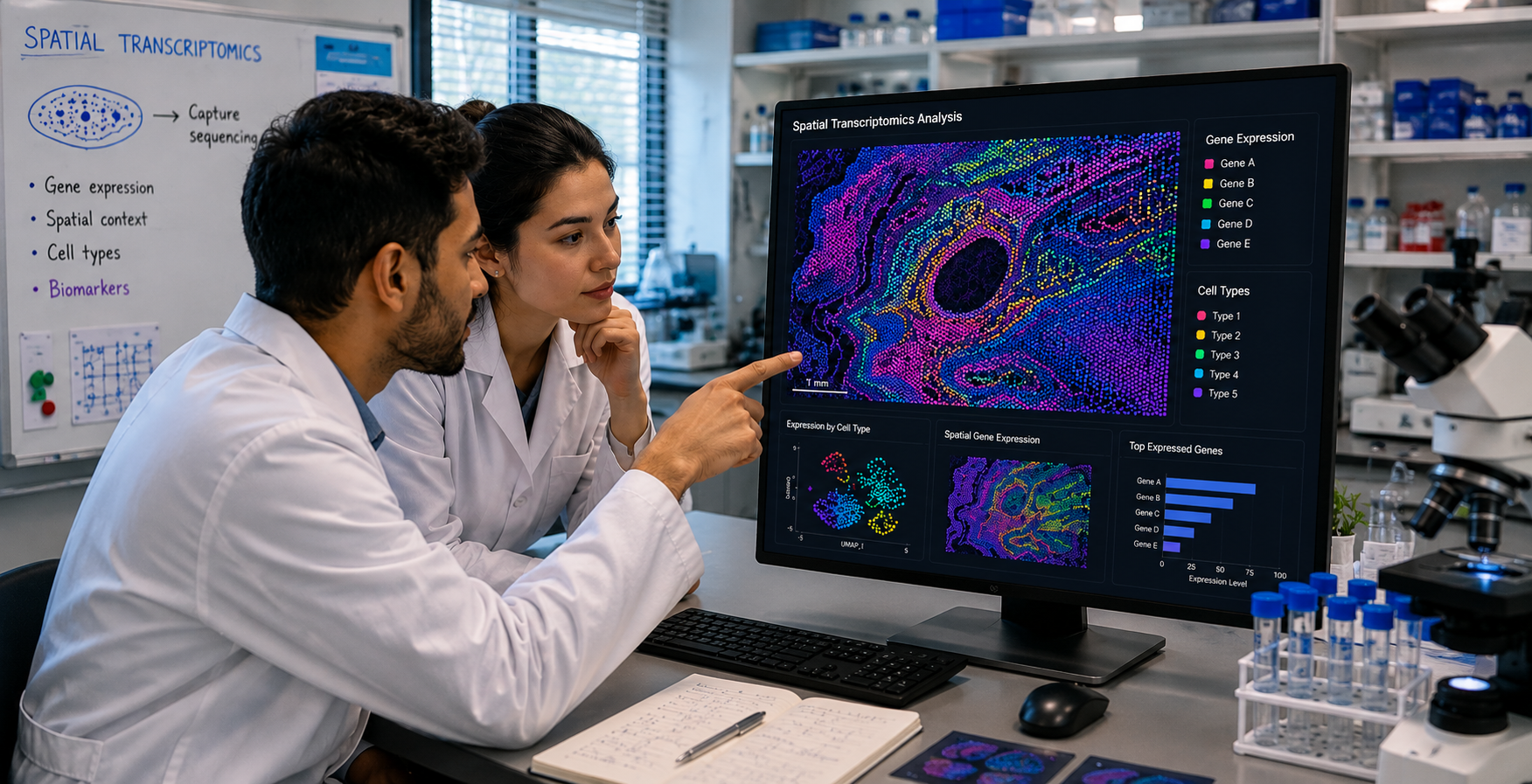
4. Spatial Transcriptomics Visium · Slide-seq
Spatial context determines cancer cell behaviour — yet conventional sequencing destroys tissue architecture. Our spatial transcriptomics analysis preserves gene expression within the native tumour microenvironment, revealing spatially organised cell communities and tumour boundaries.
- Platform processing — 10x Visium and Slide-seq: SpaceRanger alignment, spot-level QC, and normalisation with Squidpy and Seurat
- Spatially variable gene identification — SPARK-X, SpatialDE, and Moran's I for discovery of expression patterns structured by tissue location
- Cell-type deconvolution — RCTD, SPOTlight, and cell2location to decompose mixed spatial spots into constituent cell types
- Tumour region mapping — Spatial domain identification, tumour boundary delineation, and invasion front characterisation
- scRNA-seq integration — Mapping single-cell reference atlases onto spatial coordinates for high-resolution cell-type positioning
5. Epigenomics & Chromatin Analysis ChIP · ATAC · WGBS
Epigenetic reprogramming is a hallmark of cancer — driving oncogene activation, tumour suppressor silencing, and acquisition of stem-like properties. We support the full range of cancer epigenomics assays with validated, publication-grade pipelines.
- ChIP-seq — Histone modifications (H3K27ac, H3K4me3, H3K27me3) and transcription factor occupancy; peak calling (MACS3), differential binding (DiffBind), and motif enrichment (HOMER, MEME-ChIP)
- ATAC-seq — Open chromatin and nucleosome positioning; peak calling, differential accessibility, footprinting, and TF activity inference with chromVAR and TOBIAS
- DNA methylation — WGBS, RRBS, and Illumina EPIC array analysis; bismark alignment, differentially methylated region (DMR) calling with DSS and methylKit
- Multi-omics epigenomic integration — Seurat WNN, MOFA+, and ArchR for joint analysis linking chromatin state to gene expression in the same cells
6. Proteomics & Metabolomics LC-MS · GC-MS · TMT
Genome-wide data alone does not capture the full complexity of cancer. We complement nucleic acid analyses with protein and metabolite measurements to provide a complete picture of tumour biology and identify novel therapeutic targets.
- Quantitative proteomics — Label-free quantification (LFQ) and TMT / iTRAQ-based analysis; MaxQuant and Proteome Discoverer processing with Perseus statistical framework
- Phosphoproteomics & PTMs — Post-translational modification profiling for oncogenic signalling network reconstruction
- Metabolomics — LC-MS and GC-MS data: XCMS feature detection, differential abundance analysis, and MetaboAnalyst pathway mapping
7. Multi-Omics Integration MOFA+ · SNF · iCluster
No single omics layer tells the full story of a tumour. Our multi-omics integration services combine genomic, transcriptomic, epigenomic, proteomic, and metabolomic datasets to reveal synergistic mechanisms invisible in any single data type — and to stratify patients with greater precision.
- MOFA+ — Multi-Omics Factor Analysis for unsupervised integration and latent factor discovery across data types
- Weighted SNF — Similarity Network Fusion for robust multi-omics patient stratification and subgroup discovery
- iCluster — TCGA-style integrative clustering for cancer subtype discovery with clinical outcome linkage
- Mediation analysis — Linking DNA variants to RNA expression to protein abundance for causal pathway reconstruction
Key Applications
Research and translational applications across the cancer biology spectrum.
- Driver mutation discovery and cancer gene ranking
- Tumour heterogeneity and clonal evolution modelling
- Tumour microenvironment and immune infiltration profiling
- Immunotherapy biomarker discovery (TMB, MSI, neoantigen load)
- Fusion transcript identification and structural variant mapping
- Epigenetic reprogramming and enhancer hijacking analysis
- Cancer subtype classification and patient stratification
- Drug target identification and resistance mechanism mapping
- Neoantigen prediction for personalised vaccine design
- Publication-ready figures, statistics, and manuscript support
Cancer Types We Support
Direct analytical experience across solid tumours and haematological malignancies.
- Breast cancer (ER+, HER2+, TNBC subtypes)
- Lung cancer (NSCLC — adenocarcinoma, squamous cell; SCLC)
- Colorectal cancer (MSI-H vs. MSS stratification)
- Prostate cancer (AR signalling, CRPC)
- Pancreatic ductal adenocarcinoma (PDAC)
- Glioblastoma multiforme (GBM) and other CNS tumours
- Hepatocellular carcinoma (HCC) and cholangiocarcinoma
- Ovarian, cervical, and endometrial cancers
- Renal cell carcinoma (ccRCC and papillary subtypes)
- Melanoma and other skin cancers
- Acute myeloid leukaemia (AML) and myelodysplastic syndromes (MDS)
- Acute lymphoblastic leukaemia (B-ALL, T-ALL)
- Chronic myeloid leukaemia (CML) and BCR-ABL1 monitoring
- Diffuse large B-cell lymphoma (DLBCL) and follicular lymphoma
- Multiple myeloma (MM) and plasma cell dyscrasias
- Chronic lymphocytic leukaemia (CLL)
Our Analytical Workflow
A rigorous eight-step process delivering publication-quality results on time and within scope.
Step 1 — Project Scoping Free
Consultation to define research questions, sample types, sequencing strategy, and deliverables. We assess data quality, coverage requirements, and statistical power.
Step 2 — Data Receipt & QC
Secure, encrypted data transfer and storage. Comprehensive QC reporting (FastQC, MultiQC, Cell Ranger summary) before analysis begins.
Step 3 — Pipeline Configuration
Selection and version-controlled configuration of validated bioinformatics pipelines matched to your data type, organism, and analytical goal.
Step 4 — Primary Analysis
Alignment, quantification, variant calling, or cell demultiplexing as appropriate. All steps logged and reproducible via Snakemake / Nextflow.
Step 5 — Statistical Analysis
Differential analysis, enrichment testing, clustering, integration, and biomarker identification using appropriate statistical frameworks for your study design.
Step 6 — Visualisation
Publication-ready figures — volcano plots, heatmaps, UMAP embeddings, Kaplan–Meier curves, lollipop plots, oncoprints, and genome browser tracks.
Step 7 — Interpretation & Report
A structured written report covering methods, results, biological interpretation, limitations, and suggested follow-up experiments.
Step 8 — Manuscript Support Optional
Methods section drafting, figure legends, supplementary table preparation, and response to peer-reviewer comments.
Tools & Technologies
Industry-standard, peer-reviewed, and actively maintained tools across all pipelines.
- Alignment — DNA: BWA-MEM2, GATK BaseRecalibrator, Bowtie2
- Alignment — RNA: STAR 2-pass, HISAT2, Salmon
- Variant Calling: Mutect2, Strelka2, VarScan2, SomaticSniper
- CNV Analysis: ASCAT, CNVkit, PURPLE, FACETS, Sequenza
- SV / Fusion (DNA): GRIDSS, Manta, LUMPY, DELLY
- Fusion (RNA): STAR-Fusion, Arriba, FusionCatcher
- Clonal Evolution: PyClone-VI, CLONET, PhyloWGS
- scRNA-seq: Seurat, Scanpy, Cell Ranger, Monocle3
- Spatial Transcriptomics: SpaceRanger, Squidpy, cell2location
- Epigenomics: MACS3, bismark, DiffBind, chromVAR, TOBIAS
- Multi-Omics: MOFA+, SNF, iCluster, DIABLO
- Visualisation: ggplot2, ComplexHeatmap, Seaborn, Circos
- Workflow Management: Snakemake, Nextflow, CWL
Public Databases & Reference Resources
All major oncogenomics databases for contextualising and benchmarking your findings.
- TCGA (The Cancer Genome Atlas) — Pan-cancer multi-omics reference; comparative cohort analysis and survival data integration
- ICGC / PCAWG — International WGS cohorts for mutational signature validation and cross-cohort comparison
- GEO / ArrayExpress — Public RNA-seq and microarray datasets for meta-analysis and benchmarking
- COSMIC v99+ — Cancer somatic mutation catalogue; SBS, DBS, and ID mutational signature definitions
- ClinVar / CIViC / OncoKB — Clinical variant interpretation and therapeutic actionability scoring
- cBioPortal — Interactive multi-omics cancer genomics exploration and patient cohort comparison
- ENCODE / Roadmap Epigenomics — Reference epigenomic profiles for ChIP-seq and ATAC-seq peak annotation
- MSigDB — Curated gene sets for GSEA, pathway enrichment, and gene set overlap analysis
- Human Protein Atlas — Cancer — Protein expression levels and survival correlations across cancer types
Project Deliverables
Standardised, structured outputs designed to support your downstream decisions, publications, and grant applications.
- Quality control report (MultiQC HTML + PDF) covering all samples
- Processed data files: aligned BAMs, count matrices, VCF files
- Annotated results tables (TSV / Excel): variants, DEGs, peaks, pathways
- Publication-ready figures (PDF, SVG, PNG at 300 dpi)
- Full written report: methods, results, interpretation & recommendations
- Pipeline scripts and configuration files for full reproducibility
- Post-delivery consultation call for results walkthrough and Q&A
- Manuscript methods section and figure legends (journal-formatted)
- Supplementary data tables and extended figure sets
- Custom R Shiny or Python Dash interactive data explorer
- Training and knowledge transfer sessions for your team
- Long-term retainer support for ongoing projects
- Response to peer-reviewer bioinformatics comments
Why Choose BioinformaticsNext?
Deep oncology domain knowledge, validated pipelines, and a commitment to reproducible science.
Domain Expertise
Our analysts hold advanced degrees in bioinformatics, computational biology, and oncology. We speak the language of cancer biology, not just data science.
End-to-End Service
From raw FASTQ to published figure — every step handled in-house, eliminating the need for your own bioinformatics infrastructure.
Validated Pipelines
All workflows follow published best-practice guidelines (GATK, ENCODE, Seurat). Every tool version is recorded for full reproducibility.
Fast Turnaround
Most projects are delivered within 2–4 weeks. Rush turnarounds are available for grant deadlines and conference submissions.
Flexible Engagement
Project-based, hourly, or long-term retainer arrangements. We scale to your timeline and budget with no minimum commitment.
Data Security
Encrypted data transfer and storage. NDAs and GDPR-compliant Data Processing Agreements available upon request.
Manuscript Track Record
We have contributed to peer-reviewed publications and support researchers through the full submission and revision process.
Global Reach
UK-headquartered with clients across Europe, North America, the Middle East, and Asia-Pacific.
Frequently Asked Questions
Common questions from oncology research clients.
We accept raw FASTQ files, aligned BAM / CRAM files, and processed count matrices (e.g. Cell Ranger output, HTSeq counts, Salmon / Kallisto quant files). We also work with microarray data (CEL, IDAT, raw text) and can access publicly available datasets directly from GEO or SRA on your behalf.
Matched tumour-normal pairs are strongly recommended as they substantially reduce false-positive rates. However, we also support tumour-only analysis using panel-of-normals (PON) approaches where matched normals are unavailable, and we clearly flag the limitations of this design in all reports.
Optimal coverage depends on the application. For WGS somatic calling, 60× tumour / 30× normal is standard. For targeted panels, 500× or higher is recommended. For RNA-seq, 30–50 million paired-end reads per sample is typically sufficient for most cancer transcriptomics questions. We advise on sequencing strategy during the free scoping call at no charge.
Yes. We routinely analyse cohorts ranging from a single case study to large multi-centre datasets. For small cohorts (n < 10), we adapt our statistical approaches accordingly and are transparent about the reduced statistical power.
All data transfers use encrypted channels (SFTP / HTTPS). We do not retain client data beyond the agreed project period. For human patient data, we provide a Data Processing Agreement (DPA) compliant with GDPR and other relevant regulations. Sample identifiers can be anonymised prior to transfer if preferred.
Absolutely. We assist with the bioinformatics sections of grant applications — including sequencing strategy justification, power calculations, proposed analytical workflows, and preliminary data generation. Please contact us as early as possible in the grant preparation process.
Related Research Areas & Services
Cancer biology intersects with multiple other research domains we support.
- Immunology & Immuno-Oncology — TME immune composition, T-cell exhaustion states, and checkpoint biology for immuno-oncology drug development
- Genetics & Germline Analysis — BRCA1/2, MLH1, TP53 germline predisposition variants and hereditary cancer syndrome profiling
- Microbiology & Metagenomics — Tumour microbiome profiling and host-pathogen interactions in cancer aetiology
- Metabolism & Endocrinology — Metabolic reprogramming in cancer; Warburg effect and oncometabolite profiling
- Custom Software & Pipeline Development — Bespoke cancer data portals, clinical variant reporting tools, and automated pipeline deployment
Ready to Power Your Cancer Research?
Tell us about your dataset and your research question. Our oncogenomics team will design a tailored analytical plan — typically within 48 hours of your enquiry. Whether you have data in hand or are still planning your sequencing experiment, we are here to help from day one.