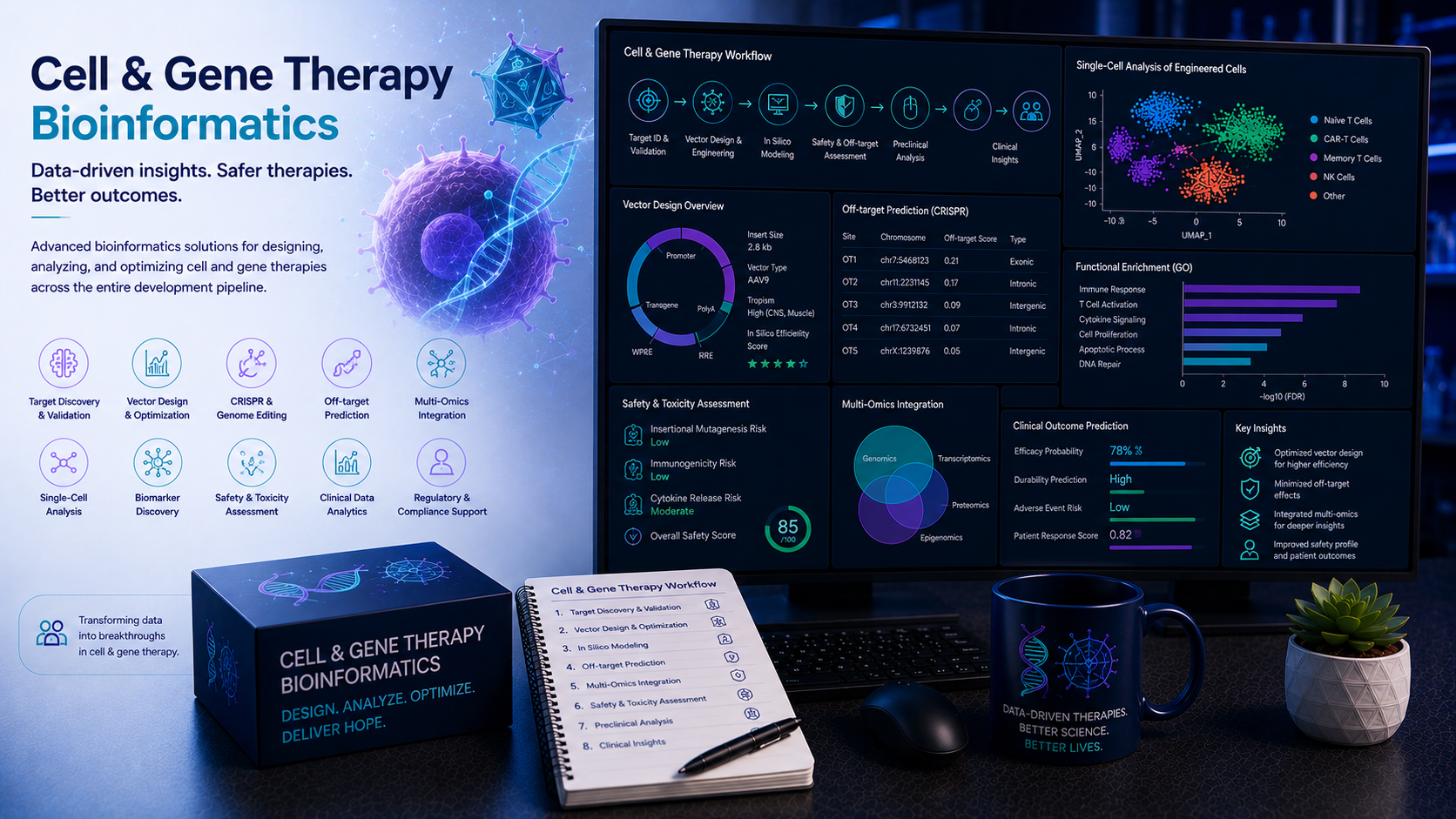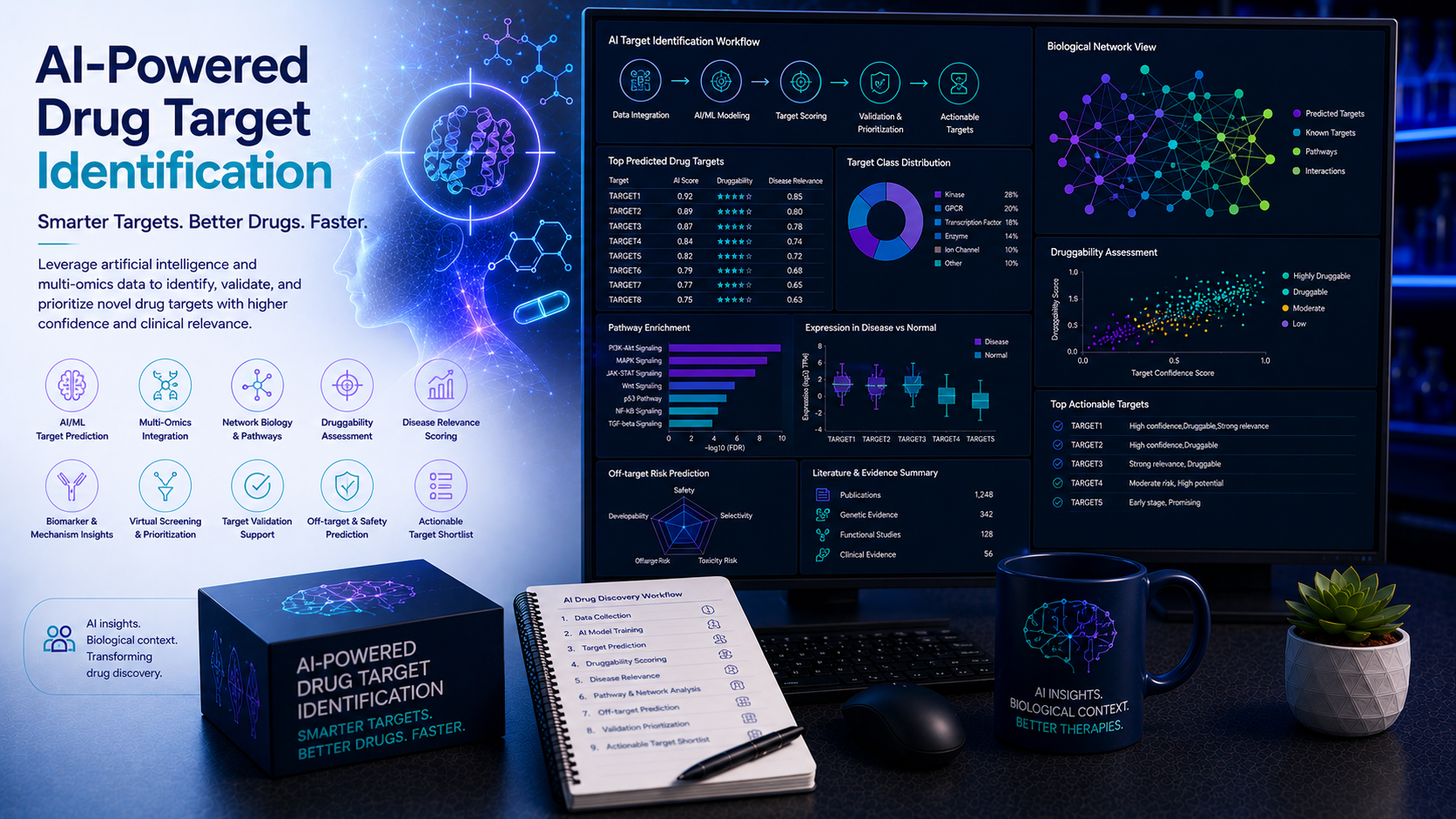
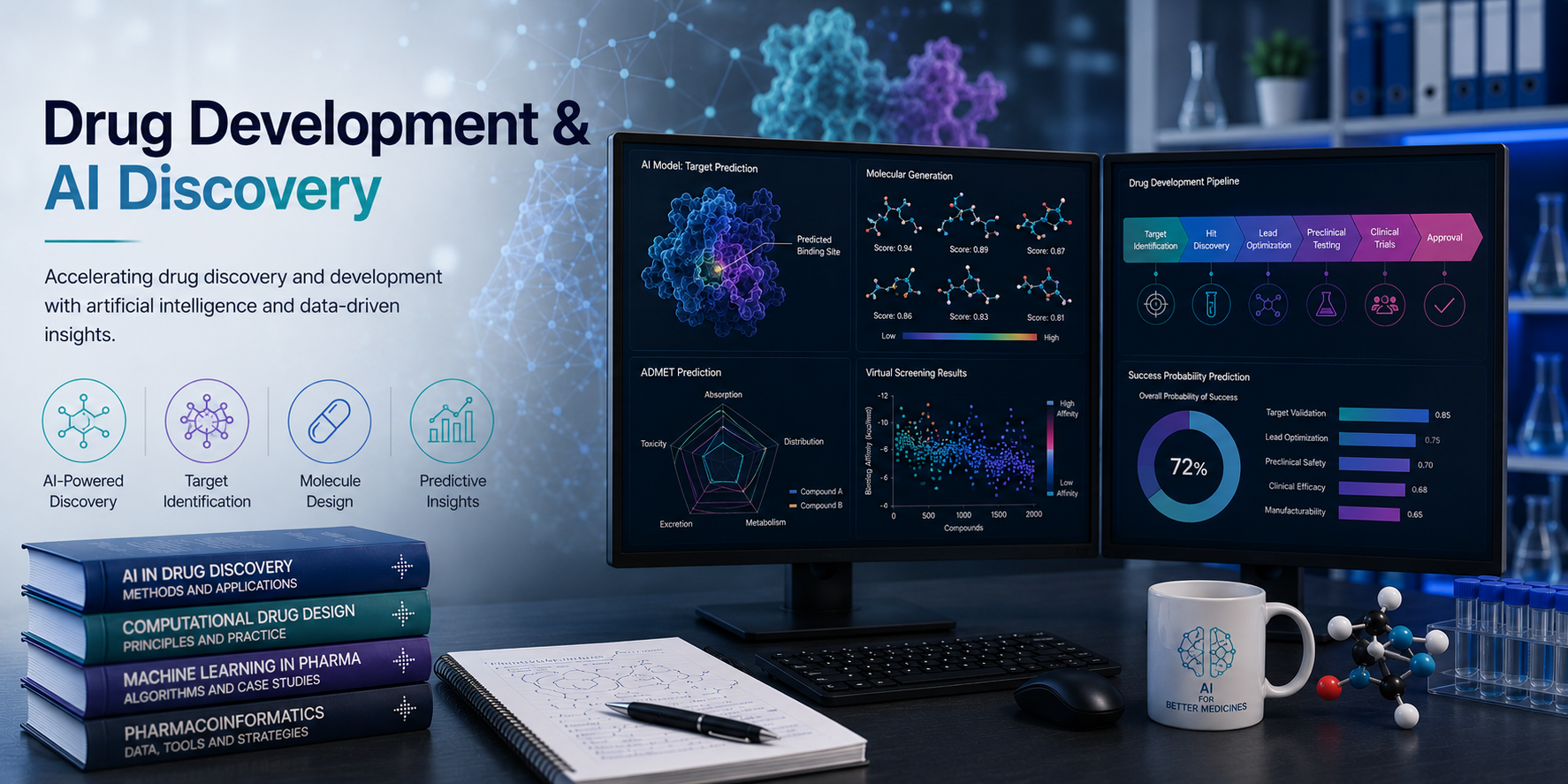
Drug discovery and development is one of the most data-intensive endeavours in modern science. From identifying a novel therapeutic target to characterising its mechanism of action, predicting compound binding, profiling off-target effects, and stratifying patients for clinical trials — every stage of the drug development pipeline is being transformed by omics technologies and artificial intelligence. At BioinformaticsNext, we provide expert bioinformatics and computational biology support for drug development and AI-driven discovery, helping pharmaceutical teams, biotech companies, and academic researchers accelerate the path from biological insight to therapeutic candidate.
Bioinformatics for Drug Development & AI-Driven Discovery
Accelerating the path from biological insight to therapeutic candidate.
The integration of high-throughput genomics, transcriptomics, proteomics, structural biology, and machine learning is reshaping how drugs are discovered and developed. Target identification is now guided by GWAS and multi-omics evidence. Lead optimisation is informed by protein structure prediction and molecular docking. Biomarker discovery draws on single-cell transcriptomics and circulating proteomics. Patient stratification leverages polygenic scores and molecular subtypes.
At BioinformaticsNext, we provide the full computational stack to support each of these steps — combining biological expertise with cutting-edge AI and bioinformatics tools to de-risk your drug development programme and accelerate timelines.
What We Support
Comprehensive computational support across the full drug development pipeline.
- Target identification and prioritisation from multi-omics and GWAS evidence
- Protein structure prediction, molecular docking, and virtual screening
- Drug mechanism of action profiling using transcriptomics and proteomics
- Biomarker discovery and validation for patient stratification and trial enrichment
- Drug resistance mechanism identification from genomic and transcriptomic data
- AI-powered compound activity prediction and ADMET property modelling
- Repurposing of existing drugs using network pharmacology and omics signatures
- Neoantigen and personalised immunotherapy target prediction
Our Drug Development & AI Discovery Services
Comprehensive computational support from early target discovery through to clinical biomarker development.
All analyses are tailored to your therapeutic area, data type, and stage of development.
1. Target Identification & Prioritisation GWAS · Multi-omics · Networks
Selecting the right therapeutic target is the most critical decision in drug development. We use multi-omics data integration, genetic evidence, and network analysis to identify and prioritise targets with the strongest biological rationale and highest probability of clinical success.
- GWAS evidence integration — Linking disease-associated genetic variants to target genes via colocalisation with eQTL, pQTL, and sQTL datasets; causal gene prioritisation with MAGMA, SMR, and Mendelian randomisation
- Differential expression-based target discovery — DESeq2 and edgeR analysis of disease vs. control transcriptomes; identification of consistently dysregulated genes across multiple datasets and tissue types
- Druggability assessment — Cross-referencing candidate targets against ChEMBL, DrugBank, DGIdb, and OpenTargets for known druggability, existing compounds, and chemical matter availability
- Network-based target identification — Protein-protein interaction (PPI) network analysis with STRING, BioGRID, and HuRI; hub gene and bottleneck identification; disease module mapping
- Multi-omics target scoring — Integration of GWAS, eQTL, differential expression, pathway, and druggability evidence into a composite target prioritisation score using OpenTargets and custom frameworks
- Single-cell target expression profiling — Cell-type-specific target expression from scRNA-seq atlases to assess tissue selectivity, minimise off-target risks, and guide therapeutic window estimation
2. Protein Structure Prediction & Molecular Docking AlphaFold2 · AutoDock · MD
Structural knowledge of the target protein is essential for rational drug design. We provide computational structural biology support — from AI-powered structure prediction to virtual screening and binding site analysis — enabling structure-guided drug discovery without the need for experimental crystallography.
- AlphaFold2 structure prediction — High-confidence 3D protein structure prediction for novel targets without experimental structures; multimer prediction for protein complex modelling
- Binding site identification — Cavity detection and druggability assessment with fpocket, SiteMap, and DoGSiteScorer; allosteric site identification
- Molecular docking — Rigid and flexible docking of small molecules against target binding sites with AutoDock Vina, Glide, and GOLD; docking score analysis and pose visualisation
- Virtual screening — Large-scale screening of compound libraries (ChEMBL, ZINC, Enamine) against target structures; hit identification and ranking by docking score and ADMET filters
- Molecular dynamics (MD) simulations — GROMACS and AMBER-based MD simulations for protein-ligand complex stability; binding free energy estimation with MM-PBSA and MM-GBSA
- Pharmacophore modelling — 3D pharmacophore generation from active compound sets; pharmacophore-based virtual screening for novel scaffold identification
- PPI interface analysis — Hot-spot residue identification; PPI interface druggability assessment for difficult-to-drug targets
3. AI-Powered Drug Discovery QSAR · Generative AI · DTI · Repurposing
Artificial intelligence is accelerating every stage of drug discovery — from predicting compound activity to designing novel molecules and identifying synergistic drug combinations. We deploy state-of-the-art machine learning and deep learning models for drug discovery applications.
- QSAR and activity prediction models — Quantitative structure-activity relationship modelling using random forest, gradient boosting, and deep neural networks; compound potency, selectivity, and activity cliff prediction
- ADMET property prediction — AI-based prediction of absorption, distribution, metabolism, excretion, and toxicity using DeepPurpose, ADMET-AI, and pkCSM; early-stage compound triage and lead optimisation guidance
- Generative molecular design — De novo molecule generation using VAEs, GANs, and transformer-based models (MolGPT, REINVENT); scaffold hopping and molecular optimisation
- Drug-target interaction (DTI) prediction — Deep learning-based DTI prediction with DeepDTA, MolTrans, and GraphDTA; target deorphanisation and polypharmacology mapping
- Drug combination prediction — Synergy scoring and prediction of drug combination effects using SynergyFinder, DECREASE, and machine learning ensemble models
- Drug repurposing with knowledge graphs — Heterogeneous biological knowledge graph construction and graph neural network-based repurposing; identification of approved compounds with activity against novel disease targets
4. Mechanism of Action (MoA) Profiling CMap · LINCS · CRISPR · Proteomics
Understanding how a drug exerts its effect — and what off-target consequences it may have — is critical for both efficacy and safety. We use transcriptomics, proteomics, and pathway analysis to elucidate drug mechanisms of action at the molecular level.
- Transcriptomic MoA profiling — Differential gene expression of drug-treated vs. control cells; GSEA-based pathway enrichment; connectivity mapping against LINCS L1000 and CMap databases for MoA inference
- Proteomic target engagement — Thermal proteome profiling (TPP) data analysis; drug affinity responsive target stability (DARTS) analysis; identification of direct binding proteins and downstream effectors
- Perturbation transcriptomics — CRISPR screen data analysis (MAGeCK, BAGEL2); genetic perturbation signature comparison with drug signatures for target validation
- Network pharmacology analysis — Construction of drug-target-disease networks; pathway impact and topological analysis; polypharmacology and off-target effect mapping
- Time-course expression analysis — Temporal gene expression modelling; early and late transcriptional response characterisation; dynamic pathway activation mapping
5. Biomarker Discovery & Patient Stratification Genomic · Proteomic · ML Models
Identifying robust biomarkers is essential for clinical trial enrichment, companion diagnostic development, and patient stratification. We apply multi-omics analysis and machine learning to discover, validate, and prioritise biomarker candidates from pre-clinical and clinical datasets.
- Genomic biomarker discovery — Somatic variant, CNV, and mutational signature analysis for predictive biomarker identification; TMB and MSI scoring for immunotherapy response prediction
- Transcriptomic biomarker panels — Feature selection with LASSO, elastic net, and random forest from RNA-seq data; multi-gene signature development and cross-cohort validation
- Proteomic biomarker discovery — Plasma and tissue proteomics differential abundance analysis; circulating biomarker candidate identification and ROC performance assessment
- Metabolomic biomarkers — Circulating metabolite biomarker discovery from LC-MS and GC-MS data; metabolite panel development for disease diagnosis and drug response monitoring
- Patient stratification & molecular subtyping — Unsupervised clustering and multi-omics integration to identify molecularly defined patient subgroups; survival analysis and treatment response correlation
- Predictive model development — Machine learning classification models for drug response, toxicity, and disease progression prediction; cross-validation, calibration, and performance benchmarking
6. Drug Resistance Mechanism Analysis Clonal Evolution · CRISPR · Networks
Understanding the molecular mechanisms of acquired and intrinsic drug resistance is critical for developing combination strategies and next-generation therapeutics. We analyse genomic, transcriptomic, and proteomic data from resistant cell lines, patient tumours, and clinical trial samples to map resistance landscapes.
- Resistance mutation identification — Somatic variant calling in pre- and post-treatment samples; identification of acquired resistance mutations in drug targets (e.g. EGFR T790M, BCR-ABL T315I, KRAS G12C)
- Transcriptomic resistance signatures — Differential gene expression between sensitive and resistant models; pathway enrichment to identify alternative survival signalling routes activated upon resistance
- Clonal evolution under drug pressure — PyClone-VI-based clonal dynamics analysis; tracking resistant subclone emergence and expansion across treatment timepoints
- Bypass pathway identification — Multi-omics network analysis to identify alternative signalling routes and synthetic lethality partners exploitable in resistant settings
- CRISPR resistance screen analysis — Genome-wide CRISPR screen analysis with MAGeCK and BAGEL2; identification of genes whose loss confers drug resistance or sensitivity
7. Drug Repurposing CMap · Knowledge Graphs · MR
Repurposing approved drugs for new indications offers a faster, lower-cost route to the clinic than de novo drug discovery. We use omics signatures, network pharmacology, and AI-based approaches to identify repurposing opportunities with strong biological rationale.
- Connectivity mapping (CMap / LINCS) — Matching disease gene expression signatures to drug perturbation profiles to identify compounds that reverse disease transcriptomes
- Knowledge graph-based repurposing — Graph neural network analysis of drug-gene-disease knowledge graphs (Hetionet, PrimeKG) for multi-hop repurposing inference
- Genetic evidence-guided repurposing — Mendelian randomisation using drug target genes as genetic instruments to assess causal effect on disease outcomes
- Phenotypic similarity repurposing — Disease similarity network analysis using molecular, phenotypic, and clinical data to identify shared biological mechanisms and cross-indication opportunities
Key Applications
Research and development applications across the full therapeutic pipeline.
- Novel target identification and genetic validation
- Structure-guided lead optimisation
- AI-powered compound library screening
- Drug mechanism of action elucidation
- Companion diagnostic and predictive biomarker development
- Oncology precision medicine and patient stratification
- Drug resistance profiling and combination strategy design
- Immunotherapy target and neoantigen identification
- Drug repurposing and indication expansion
- Clinical trial biomarker and endpoint development
- Toxicogenomics and safety biomarker analysis
- Rare disease drug target discovery
Our Analytical Workflow
A structured, reproducible process designed to integrate seamlessly with your internal drug discovery pipeline.
Step 1 — Project Scoping Free
We discuss your therapeutic area, target, stage of development, available data, and key scientific questions to define the most appropriate analytical approach.
Step 2 — Data Receipt & QC
Secure encrypted data transfer; comprehensive QC of all omics, structural, and compound data before analysis begins.
Step 3 — Pipeline Configuration
Version-controlled computational pipeline setup matched to your data types, therapeutic modality, and analytical goals.
Step 4 — Target / Compound Analysis
Target scoring, structure prediction, docking, virtual screening, or AI model training as appropriate to your project stage.
Step 5 — Multi-Omics Profiling
Transcriptomic, proteomic, genomic, or metabolomic analysis of drug-treated or disease samples for MoA elucidation, biomarker discovery, or resistance profiling.
Step 6 — AI Model Development
Machine learning model training, validation, and performance benchmarking for activity prediction, biomarker classification, or patient stratification.
Step 7 — Visualisation & Reporting
Publication-ready figures — network diagrams, docking poses, volcano plots, survival curves, ROC plots, and compound activity heatmaps.
Step 8 — Report & Regulatory Support Optional
Structured written report; optional manuscript preparation, regulatory submission support, and patent application bioinformatics sections.
Tools & Technologies
Validated, industry-standard, and cutting-edge tools across all drug development and AI discovery pipelines.
- Target ID: OpenTargets, MAGMA, SMR, TwoSampleMR, STRING
- Structure Prediction: AlphaFold2, RoseTTAFold, ESMFold
- Docking: AutoDock Vina, GOLD, Glide, PLANTS
- MD Simulations: GROMACS, AMBER, NAMD, OpenMM
- Virtual Screening: AutoDock-GPU, ZINC, ChEMBL, Enamine
- ADMET Prediction: DeepPurpose, pkCSM, SwissADME, ADMET-AI
- Generative AI: REINVENT, MolGPT, Junction Tree VAE
- MoA Profiling: LINCS L1000, CMap, MAGeCK, BAGEL2
- Network Pharmacology: Cytoscape, igraph, NetworkX, Hetionet
- Biomarker ML: scikit-learn, XGBoost, LASSO, Random Forest
- Transcriptomics: DESeq2, edgeR, GSEA, clusterProfiler
- Proteomics: MaxQuant, Perseus, Proteome Discoverer
- Drug Repurposing: CMap, PrimeKG, PyKEEN, DGL-KE
- Workflow: Snakemake, Nextflow, CWL
Reference Databases We Use
All major drug discovery and chemical biology reference databases to support target identification, compound screening, and biomarker discovery.
- ChEMBL — Bioactivity database of drug-like compounds; target-activity data for QSAR modelling and virtual screening
- DrugBank — Comprehensive drug and drug-target information; approved drug mechanisms, indications, and ADMET properties
- OpenTargets — Multi-evidence target-disease association scoring integrating GWAS, expression, somatic mutations, and literature
- PDB (Protein Data Bank) — Experimental protein and nucleic acid structures for docking template selection and structural analysis
- LINCS L1000 / CMap — Drug and genetic perturbation transcriptomic signatures for connectivity mapping and MoA inference
- DGIdb — Drug-gene interaction database for druggability assessment and repurposing candidate identification
- ZINC20 — Large-scale purchasable compound library for virtual screening campaigns
- HMDB / METLIN — Metabolite databases for metabolomic biomarker identification and drug metabolite profiling
- IEU Open GWAS / UK Biobank — GWAS summary statistics for Mendelian randomisation-based target validation and repurposing
Project Deliverables
A complete, structured set of outputs designed to advance your programme and support internal and external reporting.
- Target prioritisation report with evidence scoring and druggability assessment
- Docking results: ranked compound poses, binding scores, and interaction diagrams
- Omics analysis outputs: differential expression tables, pathway reports, and biomarker lists
- AI model performance metrics: accuracy, AUC-ROC, precision-recall, and calibration plots
- Publication-ready figures (PDF, SVG, PNG at 300 dpi)
- Full written report: methods, results, interpretation, and recommendations
- Pipeline scripts and configuration files for full reproducibility
- Regulatory submission bioinformatics sections (IND, CTA, NDA support)
- Patent application computational biology sections
- Manuscript methods section and figure legends (journal-formatted)
- Custom compound activity prediction web application
- Knowledge graph construction and interactive network explorer
- Long-term retainer support for ongoing drug discovery programmes
Why Choose BioinformaticsNext?
Deep pharmaceutical biology expertise combined with state-of-the-art computational tools — scientifically rigorous, reproducible, and directly applicable to your drug discovery programme.
Drug Discovery Expertise
Our analysts understand the full drug development pipeline — from target biology to clinical biomarkers — ensuring every analysis is framed in its translational context.
End-to-End Capability
From GWAS-based target identification to AI compound design to clinical biomarker validation — we cover the entire computational drug discovery stack.
Cutting-Edge AI Tools
We deploy the latest deep learning models for structure prediction, compound activity modelling, and drug-target interaction prediction — keeping your programme at the scientific frontier.
Fast Turnaround
Most projects are delivered within 2–4 weeks. Accelerated timelines available for milestone-driven programmes.
Flexible Engagement
Project-based, milestone-driven, or long-term retainer arrangements. We integrate with your internal teams as a seamless computational extension of your drug discovery group.
IP & Data Security
Strict confidentiality agreements, encrypted data transfer, and IP protection protocols as standard. NDAs signed before any data is shared.
Regulatory Awareness
We understand the data integrity and documentation requirements of drug development and can produce analyses and reports suitable for regulatory submission contexts.
Global Reach
UK-headquartered with clients across Europe, North America, the Middle East, and Asia-Pacific.
Frequently Asked Questions
Common questions from pharmaceutical, biotech, and academic drug discovery clients.
Yes. When genetic evidence is limited, we use complementary approaches including differential expression meta-analysis across public datasets, protein interaction network analysis, pathway-based target discovery, and literature mining to identify and prioritise targets. We combine multiple lines of evidence into a composite scoring framework to rank candidates by biological plausibility and druggability.
BioinformaticsNext is a computational biology and bioinformatics service — we do not perform wet-lab experiments. However, our computational analyses are designed to directly guide and prioritise experimental follow-up, and we work closely with experimental collaborators and internal teams to ensure our predictions are actionable and testable.
Yes. We routinely work with proprietary compound activity data, unpublished omics datasets, and confidential target information. All data is handled under strict NDA and confidentiality agreements. We never share, publish, or retain client data beyond the agreed project scope.
We have experience across oncology, immunology, metabolic disease, neurology, infectious disease, rare genetic disorders, and cardiovascular disease. Our target identification, structural biology, and biomarker discovery approaches are adaptable to any therapeutic area with appropriate omics and clinical data.
Yes. We produce fully documented, reproducible analyses with version-controlled pipelines and comprehensive methods sections suitable for inclusion in IND, CTA, and NDA regulatory submissions. We can also produce standalone computational biology reports formatted for regulatory review.
Absolutely. We assist with the computational biology and drug discovery sections of grant applications — including target rationale, proposed analytical workflows, AI methodology descriptions, and preliminary computational data. Please get in touch as early as possible in the grant preparation process.
Related Research Areas & Services
Drug development and AI discovery draws on expertise across multiple research domains we support.
- Cancer & Oncogenomics — Somatic variant calling, TMB and MSI scoring, neoantigen prediction, and tumour microenvironment profiling for oncology drug development
- Genetics & Genomics — GWAS-based target identification, Mendelian randomisation for causal inference, and polygenic risk score development for patient stratification
- Immunology & Immuno-Oncology — Immune target profiling, TCR/BCR repertoire analysis, and neoantigen-MHC binding prediction for immunotherapy development
- Structural & Functional Genomics — Epigenomic target characterisation, chromatin accessibility, and enhancer hijacking analysis for epigenetic drug programmes
- Custom Software & Pipeline Development — Bespoke drug discovery data portals, compound activity prediction platforms, and automated pipeline deployment
Ready to Accelerate Your Drug Discovery Programme?
Tell us about your target, your data, and your programme objectives. Our drug development and AI discovery team will design a tailored computational plan — typically within 48 hours of your enquiry. Whether you are at the target identification stage, optimising leads, or developing clinical biomarkers, we are here to support your programme from day one.